In the context of climate change, energy crisis, green building is not a solution only for developed countries but also for developing countries to solve a series of environmental problems. on a global scale. Green buildings do not go against the needs of economic development and are suitable to the socio-cultural conditions of each locality, on the basis of appropriate selection and research.
A green building is a building that achieves high efficiency in using energy and materials, minimizing adverse impacts on the environment; at the same time, designed to minimize the negative impacts of the built environment on human health and the natural environment. (Definition of Vietnam Green Building Council – Vietnam Green Building Council – VGBC, 2011).
Green building has entered the Vietnamese construction market since 2007 and has received support from both the government and the private sector. In Vietnam, one of the reasons green building is interested in development, is because Vietnam is one of the countries on the top list of the highest risk levels of climate change in the next 30 years. If the sea level rises by 1m, Vietnam will lose 12% of land use - the residence of 23% of the population. (According to the forecast of the World Bank - 2009). Besides, Vietnam is one of the Asian economies with the highest growth rate in the past 20 years (average 7.5%). In the past 10 years, the average construction growth has reached 12% and the urbanization rate is 3.4%/year, expected to reach 50% by 2025. Also during this time, the level of energy consumed Consumption has increased at a faster rate than GDP growth, an average of 14% per year. Construction works in Vietnam are using about 36% of the country's total energy consumption, an average of 33% of electricity, and contribute 25% to total greenhouse gas emissions, accounting for a third of total CO2 emissions. , the main driver of global climate change (IFC, 2015).
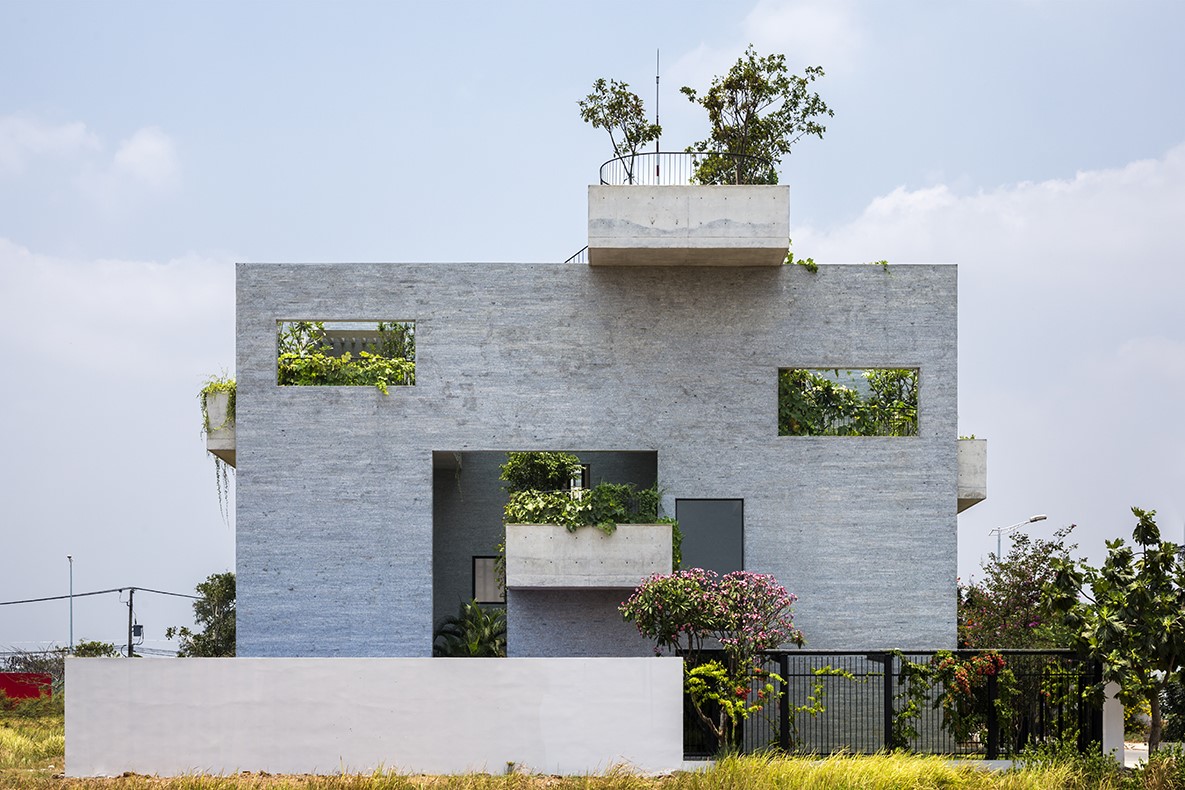
However, the phenomenon of buildings self-labeled "green" and "eco" for advertising purposes is increasing. These works do not have the data to support the actual contribution to the environment and society. Surveying these self-labeled "green" buildings, it can be seen that they only stop at the outside surface, abusing the planting of trees on the facade, on the roof of the building without proper care and maintenance plans. . Some other works have not really paid attention to the rationality of microclimate organization, functional organization allowing to optimize ventilation and natural lighting. Using the shapes without research is not suitable for the cultural, social, natural and environmental conditions of Vietnam, lacks understanding of heat radiation, so the directions have many windows facing directly to the direction. The main sun causes costs for the project. Many buildings labeled "green" have abused the use of expensive materials and equipment imported from abroad with large investment, maintenance and operation costs, or used a glass wall system for the facade. The project has a large and expensive cost for air conditioning and ventilation without a comprehensive solution to solve multi-problem architectural problems in hot and humid climate in Vietnam.
Since the last few years, there have been many efforts in Vietnam to find a direction for "green" architecture. In which, attention to the specific economic, cultural, and climate conditions of each region seems to be the way to bring green buildings into life.
Vietnam's climate is very harsh, with hot summers and high solar radiation, especially in the north with cold winters with high humidity. Green building development in our country must pay attention to climatic factors in different regions of the country. Some typical climates can be mentioned such as the climate of the Northeast mountainous region, the Northwest mountainous region, the Northern Delta region, the overlapping Laotian wind region, the southern floodplain...
Vietnam has 54 ethnic groups, so the local cultural identity is very diverse. Each ethnic group has its own customs, practices, production methods, farming, lifestyle... The selection of solutions suitable to cultural traditions, lifestyles, psychology, needs and actual capabilities of the people. residential community is very important in creating urban architectural environment. Green building development in Vietnam needs to pay special attention to the issues of local cultural identity in each region, each place has its own unique lifestyle and architecture, so green building development needs to be proposed. strategies, policies, planning solutions, construction design suitable for each region. Cultural factors are also the basis for gaining acceptance of local residents towards the practical needs of the community. From there, it can be widely applied, avoiding the risk of breaking traditional living habits.
Green buildings in Vietnam must be built in accordance with the conditions of the country's economy. Vietnam is a developing country, still poor compared to many countries in the region. Green buildings in Vietnam should promote the use of local resources, towards simple construction solutions suitable to the construction level of the region, easy to maintain, and achieve the goal of reasonable cost. consistent with the income ability of local people. Geographical constraints have formed the circumstances of each locality, it is necessary to pay attention to this particular condition in order to apply green solutions and technologies suitable to economic, cultural and social conditions. . Particular attention should be paid to rural areas, where the majority of the population lives and contains many indigenous values.
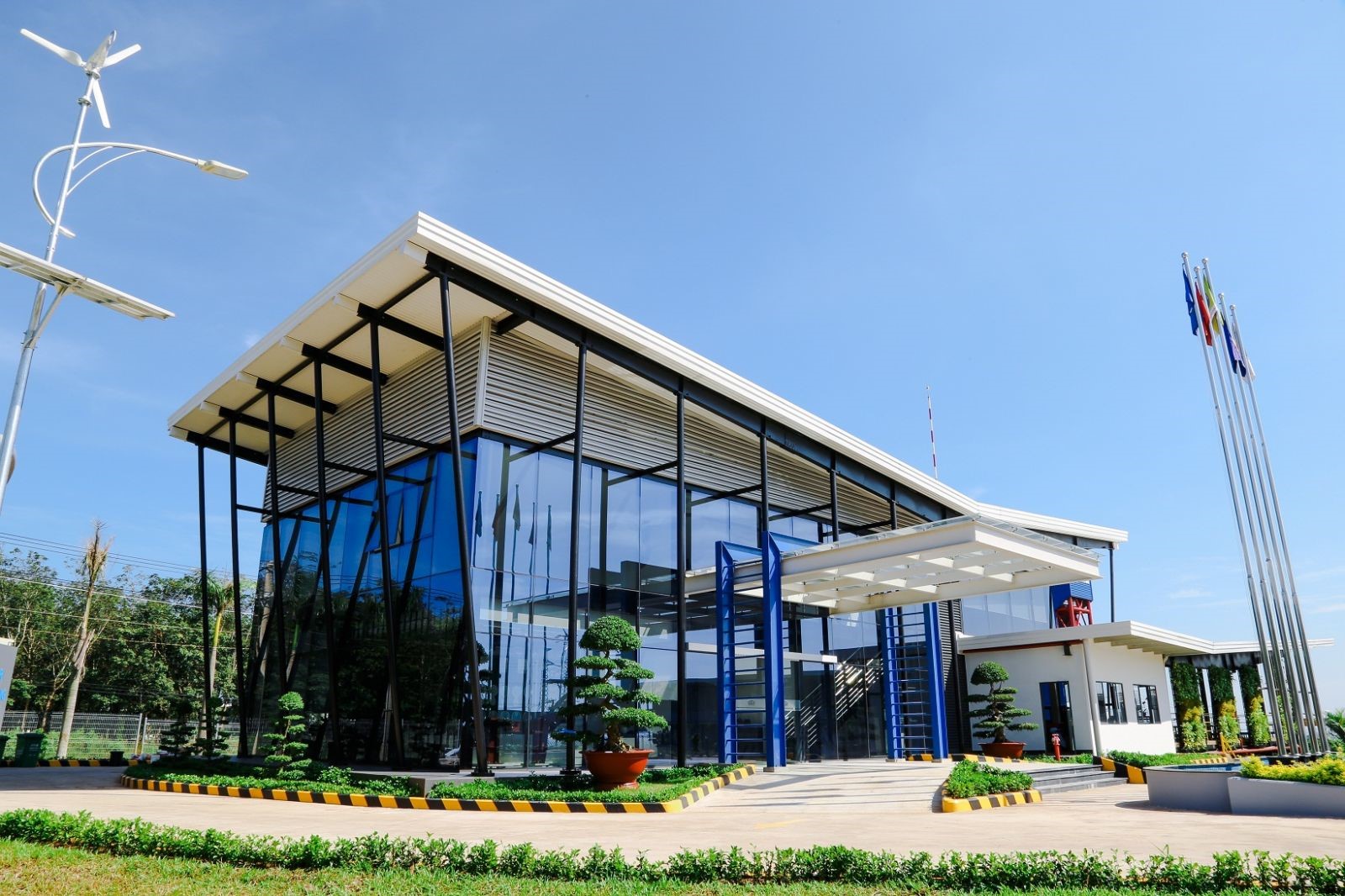
In short, green architecture not only brings economic, environmental and health benefits to people but also actively contributes to reducing climate change. It can be said that green architecture is a right direction, suggesting a very bright future and very suitable for countries in the tropics with developing economies like ours. In order for the green architecture model to be widely applied in order to use energy economically and efficiently, we need to conduct surveys, research and learn from experience to come up with reasonable and practical mechanisms and policies. & suitable for Vietnamese conditions.
Source: www.tapchikientruc.com.vn
_thumb_150.png)